
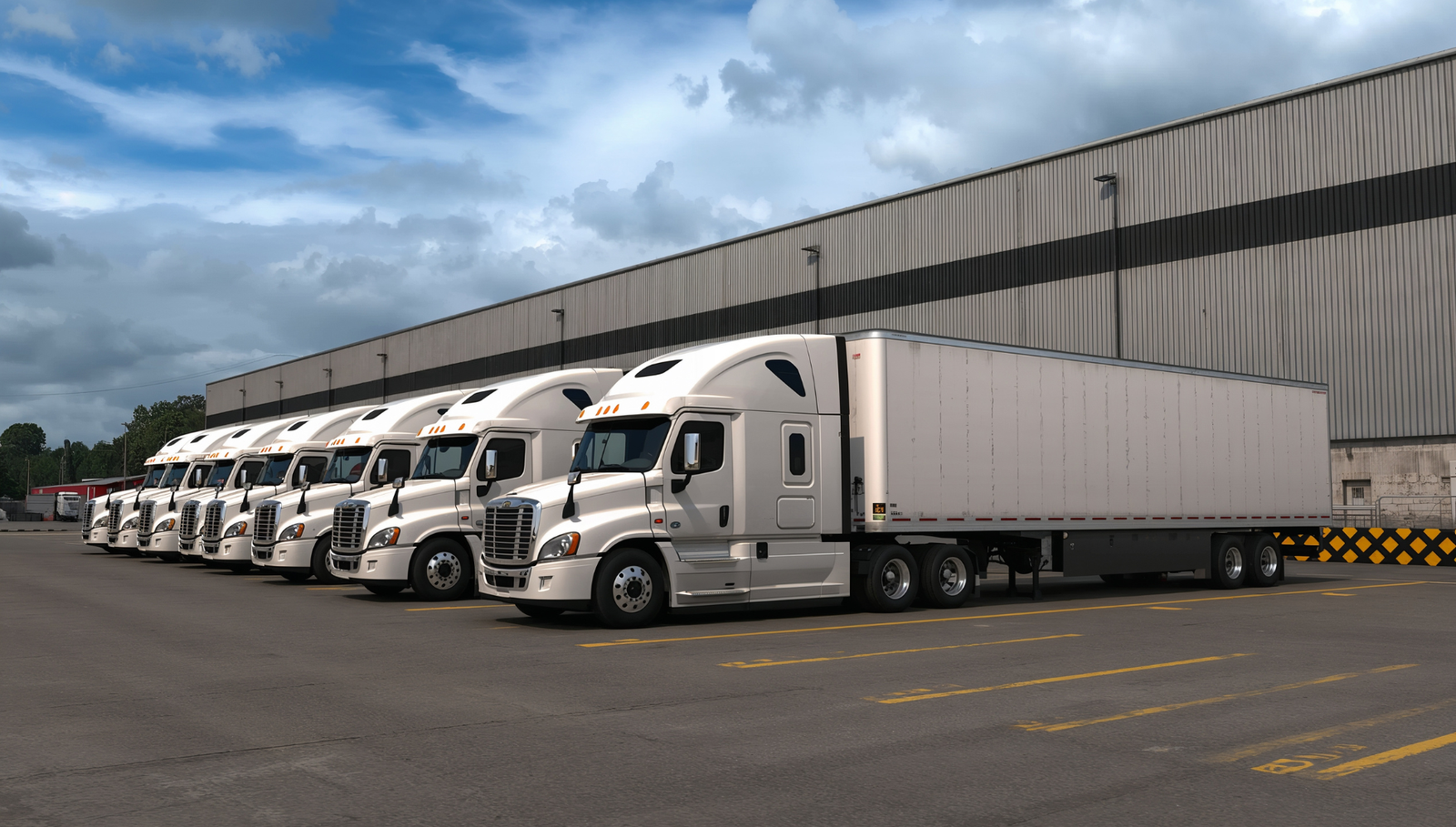
Selling a commercial truck is nothing like selling a car. The buyer pool is smaller and more specialized, pricing depends on specs that most valuation tools don’t capture, and a single missing document can derail a transaction weeks into the process. Whether you’re moving a semi truck, a box truck, a flatbed, a dump truck, or an entire fleet of work units, getting this right takes a different approach than any private vehicle sale.
The fleet purchasing team at Northern Auto Brokers in Edmonton has bought and moved commercial trucks of every type and condition across Alberta and Canada. This guide covers everything you need to know — from figuring out what your truck is actually worth, to choosing the right sales channel, to closing the deal without complications.
Table of Contents
- Step 1: Know What Your Commercial Truck Is Actually Worth
- Step 2: Choose the Right Sales Channel
- Step 3: Prepare Your Truck for Sale
- Step 4: Build a Listing That Gets Serious Buyers
- Step 5: Handle Inquiries, Negotiations, and Payment Safely
- Step 6: Get the Paperwork Right
- Selling a Semi Truck: What’s Different
- Selling a Box Truck: What’s Different
- Selling a Fleet of Commercial Trucks
- Common Mistakes That Cost Sellers Money
Step 1: Know What Your Commercial Truck Is Actually Worth
Commercial trucks don’t have a single authoritative price guide the way consumer vehicles do. Canadian Black Book handles passenger vehicles well; commercial equipment is more complicated. Values vary based on specifications that standard lookup tools don’t account for — engine horsepower, transmission type, axle ratings, vocational upfitting, and application history all move the number significantly.
Here’s how to build a realistic valuation before you list or negotiate.
Search comparable active listings
The most practical starting point is scanning active listings on AutoTrader Canada’s commercial truck section and Kijiji Autos for your specific make, model, year, and closest spec match. Don’t just match year and model — match engine, horsepower, transmission type, axle rating, and GVW as closely as possible. A 400-horsepower unit and a 600-horsepower unit of the same make and model year are not the same truck, and pricing them the same is a mistake that costs sellers real money.
Understand the three price levels
Commercial truck pricing has three distinct levels, just like passenger vehicles — but the gaps between them are often larger:
- Retail price — what a buyer pays at a dealership lot, after reconditioning and markup
- Wholesale/trade-in price — what a dealer or fleet buyer pays you directly; lower than retail but fast and guaranteed
- Private sale price — potentially the highest, but requires active selling, a qualified buyer pool, and more time
Knowing which level you’re targeting determines which sales channel makes sense for your situation.
Get a professional appraisal
For higher-value commercial units — semi trucks, vocational trucks, specialty equipment — a professional appraisal from a fleet buyer or commercial truck specialist gives you the most accurate and defensible number before negotiations begin. Northern Auto Brokers’ Fleet Truck Purchasing Division provides fast appraisals on commercial units of any type, from single trucks to full fleets, with no obligation and no need to prep the vehicle beforehand.
Factors that move commercial truck values up or down
Buyers evaluating commercial trucks weigh these variables heavily:
- Engine hours vs. kilometres — for vocational trucks that idle extensively (hydrovacs, bucket trucks, generators), engine hours matter more than the odometer
- Maintenance records — documented service history is worth real money; it removes buyer uncertainty and directly increases offers
- Upfitting and equipment — service bodies, cranes, aerial lifts, and specialized equipment add value when in working order; failed or removed equipment deducts value
- Emission compliance — trucks must meet applicable emission standards for the jurisdiction where they’ll be operated; non-compliant units are restricted to certain buyers
- Accident and damage history — frame damage or major structural repairs significantly reduce value and must be disclosed
- Cab configuration — day cab vs. sleeper cab, single vs. crew, affect the buyer pool and price point
Step 2: Choose the Right Sales Channel
This is the decision that shapes everything else — how long the sale takes, how much you recover, and how much effort you invest.
Sell directly to a fleet buyer or wholesaler (fastest)
Selling directly to a business that purchases commercial trucks — like Northern Auto Brokers — is the fastest and simplest route. You get an appraisal, accept or decline the offer, and receive payment. No listing to write, no inquiries to manage, no strangers coming to view the truck, and no navigating title issues on your own. The buyer handles the transaction.
The trade-off is that direct buyers pay wholesale, not retail. They need to account for reconditioning, transport, and resale margin. For operators who need capital quickly, are selling multiple units, or are moving trucks that need work, this trade-off is almost always worth it.
Private sale (highest potential price, most effort)
Selling directly to another operator, owner-operator, or business gives you the best chance at retail-level pricing. The major platforms in Canada for commercial truck private listings include:
- AutoTrader Canada Commercial Trucks — the largest automotive marketplace in Canada, reaching serious commercial buyers nationally
- Kijiji — free to list, strong local reach, effective for regional sales particularly in Alberta
- Facebook Marketplace — fast-growing for local commercial sales; lower listing friction than specialized platforms but variable buyer quality
- TruckPaper.com and CommercialTruckTrader.com — US-based platforms with strong North American reach for semi trucks and Class 6–8 commercial units; useful when targeting buyers who regularly source equipment across the border
Be prepared: private commercial truck sales require active management. Expect to field low-quality inquiries, no-shows, and lowball offers alongside serious buyers.
Commercial truck dealer trade-in
If you’re purchasing a replacement truck from a commercial dealer, a trade-in is the most streamlined option. The dealer appraises your unit and applies the value toward your next purchase. Trade-in values are typically lower than private sale, but the efficiency of doing both transactions in one place can be worth it — especially if the dealer can handle lien payoffs as part of the deal.
Auction
Commercial truck auctions — both physical and online — provide a guaranteed sale but at wholesale or below-wholesale prices. Auction fees (seller commissions, listing fees, and transportation) must be factored into the net return. Auctions work best when you need to move volume quickly or when a truck has unusual specifications that make finding a direct buyer difficult.
The right channel depends on three things: how fast you need the money, how much margin you’re willing to leave on the table for speed and convenience, and the current condition and demand profile of your specific truck.
Step 3: Prepare Your Truck for Sale
Preparation directly affects what buyers offer and how quickly a deal closes. For commercial units, preparation is less about cosmetics and more about documentation and mechanical transparency.
Gather all service and maintenance records
This is the single highest-return preparation step for commercial trucks. A complete maintenance history — oil changes, filter replacements, major service events, brake work, tire records, and any overhaul documentation — builds buyer confidence in ways that no amount of cleaning can. Organized records signal professional operation and remove the risk premium buyers mentally add to trucks they know nothing about.
If records are scattered across invoices and receipts, spend the time to organize them chronologically before any viewing or appraisal.
Address safety-critical items without over-investing
Fix what’s obviously broken and inexpensive to repair: burnt-out lights, cracked mirrors, windshield chips, loose fittings, leaking seals. These signal neglect and give buyers easy negotiating ammunition.
Do not invest in major mechanical overhauls — engine rebuilds, transmission replacements, or significant bodywork — before selling unless the repair cost is clearly justified by the value increase. Commercial buyers and dealers can almost always do major work cheaper than you can, and they factor their own cost into the offer regardless of whether you’ve done the work.
Clean the cab and truck thoroughly
A dirty cab tells buyers the truck wasn’t cared for. Wash the exterior, clean the cab interior, and clear out all personal items and company materials. For vocational trucks with work bodies or tank units, wash the body and equipment too — buyers viewing dirty equipment assume the worst about maintenance.
Check emission and safety compliance
Know your truck’s current compliance status before listing. Commercial trucks being offered for active use in Canada must meet applicable emission standards. If your truck has any compliance issues, it’s better to understand them before a buyer’s inspector surfaces them mid-deal.
Step 4: Build a Listing That Gets Serious Buyers
For private listings, the listing does the qualification work before a buyer ever contacts you. A detailed, accurate listing attracts serious buyers and filters out time-wasters.
Lead with complete specifications
Commercial truck buyers search and evaluate based on specs, not stories. Your listing must include:
- Year, make, model, and trim/variant
- Engine make, model, and horsepower rating
- Transmission type and number of speeds
- Drive configuration (4×2, 6×4, 8×6, etc.)
- Rear axle ratio and axle weight ratings
- GVW (gross vehicle weight)
- Suspension type (air ride, spring)
- Wheelbase
- Current odometer reading and engine hours (if applicable)
- Cab type (day cab, sleeper cab, crew cab)
- Any vocational equipment or upfitting
Missing specs mean buyers have to contact you for basic information. Many won’t bother — they’ll move to the next listing.
Always include a price
According to Commercial Truck Trader, listings that include a price receive significantly more engagement than those listed as “call for price.” Serious commercial buyers work within budget constraints and won’t waste time on units without posted pricing. Price 5–10% above your walk-away number to leave negotiation room.
Use high-quality photos — and take enough of them
Commercial truck buyers make initial decisions based on photos. Shoot in daylight with the truck clean and in a clear location. Include: all four exterior angles, both three-quarter views, the engine bay, the cab interior, the dashboard (odometer showing), any upfitting or work body, and clear shots of any existing damage. Don’t hide damage — photograph it honestly. Buyers who discover undisclosed damage during inspection walk away or drop their offer significantly.
Be explicit about condition and history
Disclose any accident history, frame damage, engine or transmission work, known issues, and any equipment that is not functional. Transparency builds trust, accelerates deals, and protects you legally.
Step 5: Handle Inquiries, Negotiations, and Payment Safely
Pre-qualify buyers before scheduling viewings
For higher-value commercial trucks, it’s reasonable to ask serious buyers basic qualifying questions before committing your time: Are they purchasing for their own operation or for resale? What is their timeline? Are they financing or paying cash? Will they arrange transport or drive the unit? Serious buyers answer readily; time-wasters disappear.
Know your number before any negotiation
Decide your walk-away price before the first inquiry arrives. Sellers who haven’t set this number in advance make concessions under negotiation pressure that they later regret. Buyers often make their first offer at 15–25% below asking price for commercial trucks — this is standard, not a sign of disinterest.
Payment: cash, bank draft, or verified wire transfer only
Commercial truck transactions involve significant sums. Never release a truck based on a personal cheque, an e-transfer that hasn’t cleared, or any promise of future payment. Accept cash, a bank draft verified at the issuing branch, or a confirmed wire transfer with funds in your account before any keys change hands. Payment fraud in private commercial vehicle sales is real and well-documented — the safest transaction is one where you physically hold cleared funds before releasing the vehicle.
Be cautious of out-of-province or overseas “buyers”
Scams targeting commercial truck sellers frequently involve buyers claiming to be out of province or overseas, offering to pay by cheque (often for more than the asking price), or requesting unusual payment arrangements. If something feels wrong, trust that instinct.
Step 6: Get the Paperwork Right
Incomplete or incorrect documentation stops commercial truck transactions and can expose sellers to liability long after the sale is done.
Documents you need as the seller
- Vehicle registration — in your name, confirming legal ownership
- Lien clearance — if there is any outstanding financing on the truck, the lien must be discharged before ownership can transfer. Buyers can run a personal property lien search using the truck’s VIN to confirm this. Selling a truck with an undisclosed lien is a serious legal matter — the new owner can face repossession even after purchasing
- Complete bill of sale — date, buyer and seller names, truck description (year, make, model, VIN), agreed sale price, and both signatures. Both parties should keep a copy
- Service and maintenance records — organized and available at closing
- Any applicable safety inspection certificates — requirements vary by province; confirm current requirements with your provincial transportation authority
- Equipment documentation — certifications, manuals, and inspection records for any onboard specialized equipment
Dealing with an active lien
If there is an outstanding loan on the truck, you have two practical options: pay off the lien from your own funds before closing so ownership transfers cleanly, or coordinate with the buyer and lender to have the lien satisfied out of the sale proceeds at closing. Professional fleet buyers and dealerships handle this as routine — they work with lenders to settle the lien as part of the transaction. Private buyers are understandably more cautious about purchasing a truck with an active lien, as it introduces risk they’d rather avoid.
Transferring registration and plates
In Alberta and across Canada, plates generally stay with the seller. Once the bill of sale is complete, the buyer takes the truck’s ownership documents and registers the vehicle in their province. Cancel your insurance on the truck after the ownership transfer is confirmed.
Selling a Semi Truck: What’s Different
Semi trucks (Class 8 tractor-trailers) have a distinct buyer pool and valuation profile compared to other commercial vehicles.
The buyer pool is smaller and more specialized. Your buyers are owner-operators, small carriers, and fleet operators — not general consumers. Pricing research must match spec-for-spec: engine horsepower, transmission make and configuration, rear axle capacity, and emissions certification (pre-emissions, EPA 2010-compliant, etc.) all affect value materially.
Sleeper vs. day cab changes the buyer pool significantly. Day cab units sell primarily to regional carriers and local haulers. Sleeper cab units appeal to long-haul operators. If you’re listing privately, target platforms that reach your buyer type — TruckPaper.com and CommercialTruckTrader.com have substantial North American reach for Class 8 units.
Engine hours are as important as kilometres. A semi with 800,000 km on a well-maintained Cummins or Peterbilt engine may have more life left than one with 500,000 km that spent significant time idling or working hard grades. Pull the engine hours from the ECM and include them in every listing and conversation.
The export opportunity is real. Canadian-spec semi trucks and heavy commercial units often have strong demand in the US market. Northern Auto Brokers’ Export Division ships commercial vehicles to the US regularly and can offer an export-market valuation on Class 8 and heavy vocational units — sometimes a better return than the domestic wholesale market.
Selling a Box Truck: What’s Different
Box trucks (Class 3–6 cargo trucks with enclosed bodies) are versatile vehicles with a broad buyer pool — moving companies, delivery operations, food service operators, tradespeople, and small businesses all use them regularly. This wide demand is an advantage.
GVW and body dimensions are the primary value drivers. Specify the GVW rating, body length, interior height, and whether the truck has a liftgate. Buyers are looking for specific configurations to match their operational requirements — matching those specs is more important than the brand name.
Liftgate condition matters significantly. A working liftgate adds value; a failed or missing liftgate is a negotiating point buyers will use aggressively. If the liftgate mechanism is inoperative, either repair it or price the truck accordingly and be upfront about it.
Refrigerated and specialty body configurations attract a narrower but often willing-to-pay buyer pool. Reefer units, insulated bodies, and specialty configurations should be listed on platforms that food service and specialty logistics buyers frequent.
Body condition and roof integrity are critical. Buyers inspect box bodies for water damage, roof leaks, floor condition, and door seal integrity. A compromised box body on an otherwise sound truck can kill a deal — address roof and seal issues before listing if the repair cost is justified.
Selling a Fleet of Commercial Trucks
Selling multiple commercial trucks simultaneously is fundamentally different from selling a single unit. The dynamics of volume change the math on every option.
Private sale doesn’t scale well for fleets. Managing listings, inquiries, viewings, negotiations, and closings across five, ten, or twenty units simultaneously is a logistical undertaking most operators underestimate. The time cost alone — often weeks or months — needs to be weighed against the price premium private sale theoretically offers.
Fleet buyers and wholesalers are built for this. Northern Auto Brokers’ Fleet Truck Purchasing Division purchases commercial fleet vehicles in bulk — any condition, any mileage, 1 to 100+ units — with quick appraisals, fast payment, and hassle-free logistics. No vehicles need to be prepped for retail presentation. The transaction is designed for fleet operators who need capital deployed quickly and cleanly.
Pricing strategy for mixed fleets. Fleets rarely consist of identical units. If you’re liquidating a mixed fleet — different makes, configurations, and conditions — an experienced fleet buyer can value each unit appropriately within a single transaction rather than requiring you to negotiate each one separately.
Timing matters for fleet liquidation. Demand for commercial trucks in Alberta shifts seasonally. Work trucks — flatbeds, service bodies, oilfield units — see stronger demand heading into spring and summer construction and oilfield seasons. Planning fleet liquidation around peak demand windows rather than calendar convenience can meaningfully improve total recovery.
Common Mistakes That Cost Sellers Money
Pricing without spec-matching. Using year and model alone to set price without matching engine, transmission, axle, and configuration leads to either leaving money on the table or overpricing for months with no offers.
Hiding issues. Undisclosed damage, mechanical problems, or lien issues discovered during inspection or closing don’t just kill deals — they can expose sellers to legal liability after the sale. Disclose everything material upfront.
Accepting a cheque. A cheque, including a certified cheque that hasn’t been verified at the issuing bank, is not a safe payment instrument for a commercial truck transaction. Cheque fraud remains a documented risk in private vehicle sales. Wait for cleared funds.
Skipping the lien search. Before listing, run a personal property lien search using the truck’s VIN through an Alberta registry agent or the applicable provincial registry. Confirm your lien status before a buyer discovers it — or before you accept a deposit on a truck you can’t legally transfer.
Over-investing in pre-sale repairs. Major mechanical work before selling rarely returns its full cost in a higher sale price. Professional buyers and dealerships reconditioning units at scale can do the same work for less. Fix the cheap, visible things that affect first impressions and buyer confidence. Skip the expensive overhauls.
Listing without enough photos. In commercial truck sales, serious buyers self-qualify based on photos before making contact. A listing with few or low-quality photos screens out good buyers just as effectively as it screens out bad ones.
If you’re ready to get an offer on a commercial truck or fleet — or want to understand what your units are worth before making a decision — the team at Northern Auto Brokers works with sellers across Alberta and Canada. We buy commercial trucks in any condition, including units that need work, and handle the transaction from appraisal to payment. Call 780-289-4966, email kal@nabrokers.ca, or contact us online to get started.