
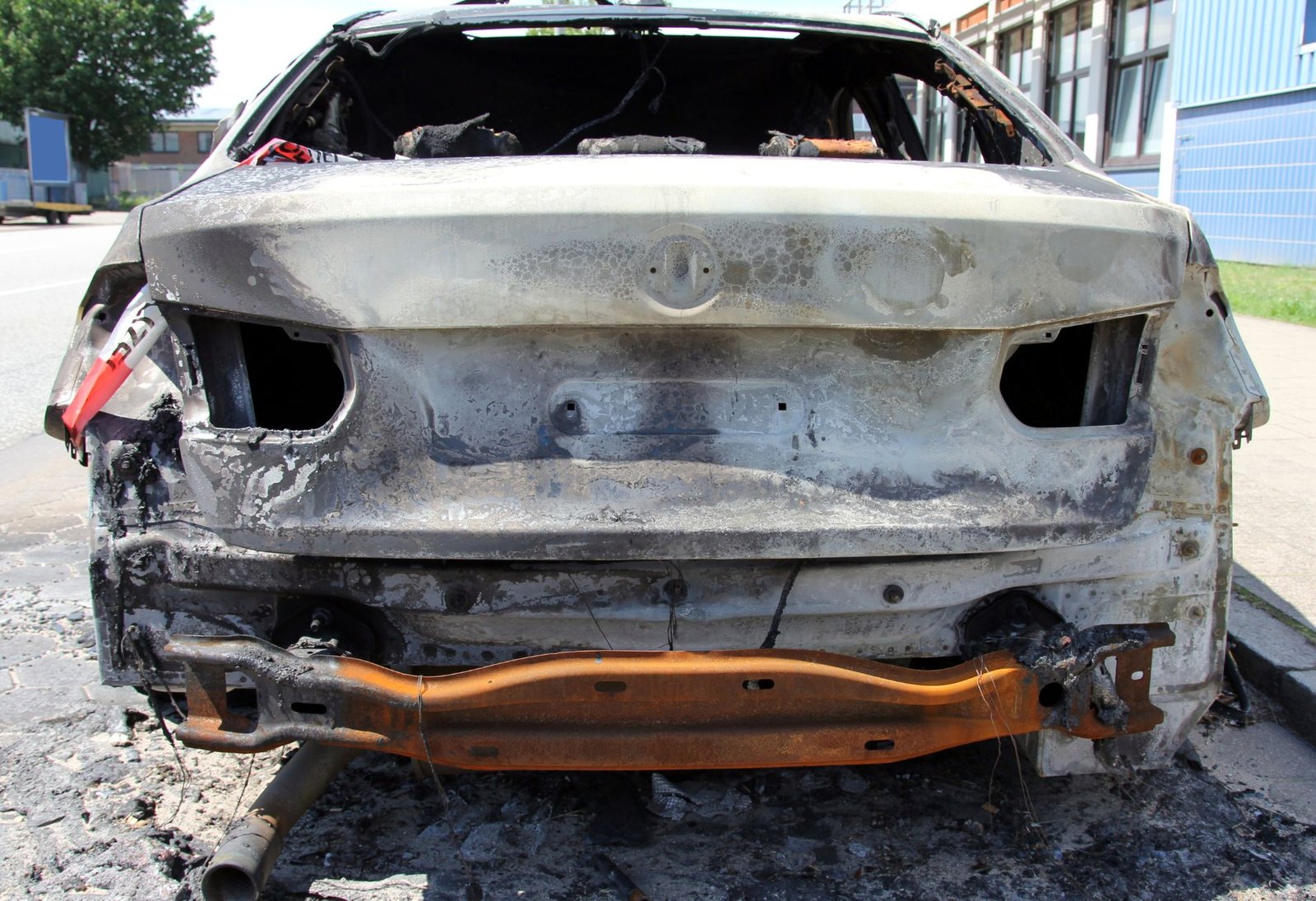
When your car is declared a write-off (total loss) and the insurer cuts you a cheque, the standard story ends with the vehicle going to a salvage auction. But if you take the owner-retained salvage option — or if you’re working with a vehicle that wasn’t insured for collision — you end up with a salvage-titled vehicle and the question of what to do with it. The Alberta team at Northern Auto Brokers has worked with write-off vehicle sales across Canada for over two decades, and this is the practical guide to selling a write-off car in Canada after the insurer pays out.
What “Write-Off” Means in Canada
A write-off (total loss) is declared when the cost to repair a vehicle exceeds — or comes close to exceeding — its pre-loss actual cash value. In Canada, the threshold varies by insurer but typically falls when repair estimates exceed 60–80% of pre-loss value.
The vehicle is then “branded” with a salvage designation, and the title carries that brand for the rest of the vehicle’s life.
Provincial title designations vary slightly:
- Alberta: Salvage, Rebuilt, Non-Repairable
- Ontario: Salvage, Rebuilt, Irreparable
- British Columbia: Salvage, Rebuilt
- Quebec: Severe Damage, Rebuilt
- Manitoba: Salvage, Rebuilt
- Saskatchewan: Salvage, Rebuilt
- Atlantic provinces: Various designations
The basic concept is consistent across Canada: once a vehicle is written off, that history attaches to the title.
How You End Up Owning a Write-Off Vehicle
Three common paths:
1. Owner-Retained Salvage After Insurance Claim
You took the insurer’s reduced settlement and kept the vehicle. The title is salvage-branded. You’re free to sell, repair, or scrap.
2. Buying a Salvage Vehicle to Repair
You bought a salvage-titled vehicle from an auction or specialty buyer with the intention of repairing and using or reselling.
3. Self-Insured or Uninsured Damage
Your vehicle was damaged but you weren’t covered for the loss (no collision coverage, deductible-related issues, lapsed insurance). The vehicle isn’t formally branded but is effectively a write-off.
In the third case, the vehicle keeps a clean title — which actually expands your sale options.
Your Options for Selling a Write-Off Vehicle
Five paths to consider.
1. Sell As-Is Without Repair
The simplest option. Sell the salvage vehicle to a specialty buyer who handles repair and resale themselves.
Buyers: – Direct specialty buyers in damaged vehicles – Repair shops looking for inventory – Parts dismantlers – U.S.-based buyers (limited markets accept salvage; restrictions vary)
Pricing: Reflects current condition minus expected repair cost minus buyer margin.
Best for: Most owner-retained salvage situations. Fastest path to cash.
2. Repair and Sell as Rebuilt
If your vehicle’s province has a rebuilt-title path (Alberta, Ontario, BC, etc.), you can: – Repair the vehicle to road-worthy condition – Submit to provincial inspection (Alberta requires inspection at an authorized facility) – Receive a rebuilt-title designation – Sell as a rebuilt vehicle
Pricing: Rebuilt vehicles typically sell for 60–80% of clean-title equivalents. The premium over salvage-as-is depends on quality of repair and documentation.
Best for: Sellers with repair skills or close repair-shop relationships, vehicles with mechanical and structural integrity worth restoring.
3. Part the Vehicle Out
Sell components (engine, transmission, body panels, electronics) individually rather than selling the whole vehicle.
Buyers: Other vehicle owners, repair shops, online parts buyers.
Pricing: Often nets more than whole-vehicle salvage value, but requires significant time and storage.
Best for: Vehicles with high-demand parts (luxury components, hard-to-find body panels, specific OEM parts), sellers with time and storage.
4. Sell to a Junkyard / Dismantler
For vehicles where repair is impractical and parts demand is limited.
Pricing: Scrap-driven, typically lowest of all channels.
Best for: Severely damaged vehicles, older common vehicles with limited parts demand.
5. Donate
Some charities accept salvage and write-off vehicles. Tax receipt may apply.
Pricing: $0 cash but tax benefit if applicable.
Best for: Vehicles with minimal sale value, owners with charitable giving goals.
Pricing Reality Check on Write-Off Vehicles
A rough guide to what to expect on a typical write-off vehicle.
As-Is Salvage Sale
Typically 25–50% of clean-title equivalent value, depending on: – Severity of damage – Cause of write-off (light hail vs heavy collision) – Vehicle make and model demand – Buyer’s downstream channels
A 2020 Ford F-250 Lariat clean-title worth $50,000 might pull $13,000–$25,000 as salvage.
Rebuilt After Repair
Typically 60–80% of clean-title value, less repair cost.
If the same F-250 cost $12,000 to repair to rebuilt-title condition: – Sale value: $30,000–$40,000 – Less repair: $12,000 – Net: $18,000–$28,000
This often nets more than as-is salvage but requires repair skill and time.
Part-Out
Highly variable. Successful part-outs on the right vehicles can net $20,000–$40,000 on the same example, but only with months of work and storage.
Junkyard
Scrap-driven. Typically $300–$2,000 for most write-offs, regardless of original value.
Provincial Variations Worth Knowing
A few province-specific notes.
Alberta
Salvage vehicles can be repaired and re-inspected to receive rebuilt status. Inspection is rigorous and includes structural, mechanical, and safety review.
Ontario
Similar to Alberta. Rebuilt-title pathway exists. Some salvage vehicles are designated “irreparable” and can never be returned to road use.
British Columbia
ICBC handles most insurance writeoffs. Rebuilt path exists with provincial inspection.
Quebec
SAAQ administers vehicle status. Rebuilt path exists but with specific procedures.
Cross-Provincial Sales
A salvage vehicle from one province can be sold in another, but the title brand follows the vehicle. Some provinces have additional inspection requirements when bringing in salvage vehicles from elsewhere.
What Doesn’t Work With Write-Off Vehicles
Three approaches that fail:
Trying to Hide the Salvage Status
Provincial vehicle history checks (Carfax Canada, ICBC vehicle history reports, etc.) reveal salvage history immediately. Misrepresenting status creates legal exposure and refund obligations.
Listing on Mainstream Channels Without Clear Disclosure
Kijiji and AutoTrader buyers shopping for clean-title vehicles will reject salvage listings. Trying to slip them through wastes time and damages reputation.
Cross-Border Sale Without Compliance
U.S. buyers have varying acceptance of Canadian salvage titles. Some states accept Canadian salvage vehicles for further repair; others don’t. Understand the destination state’s rules before proceeding.
How to Maximize Value on a Write-Off Sale
Five practical moves.
1. Document the Damage Honestly
Photos, written description, mechanical status. Buyers price more accurately when they can see what they’re working with.
2. Get Multiple Quotes
Specialty buyers, repair shops, dismantlers. The spread is wide. Three to four quotes is reasonable.
3. Consider the Right Buyer for Your Damage Type
Hail damage → specialty hail repair buyers Front-end collision → body shop with collision repair specialty Mechanical writeoff with intact body → repair-and-resell specialists Severe structural → dismantler or parts buyer
4. Don’t Repair Lightly Before Sale
Partial repairs rarely add resale value. Either do a full rebuilt-title repair (with inspection) or sell as-is. Half-repaired vehicles confuse the market.
5. Match the Channel to the Vehicle’s Profile
Late-model truck with hail damage → specialty repair-and-resell buyer Older common car with collision damage → junkyard or dismantler High-value damaged vehicle → specialty buyer with U.S. export reach (where allowed)
Common Write-Off Sale Mistakes Across Canada
Five we see consistently:
Defaulting to the Insurance Settlement Without Considering Owner-Retained Salvage
If your vehicle has resale value above what the insurer offers as salvage value, owner-retained salvage often nets more.
Holding the Vehicle Too Long
Write-off vehicles depreciate fast. Storage costs and continued condition deterioration eat into the eventual sale price. Move quickly.
Trying to DIY Repair Without Knowledge
Botched repairs can fail rebuilt inspection, leaving you with neither a sellable salvage vehicle nor a rebuilt-titled one.
Underestimating Buyer Variance
The spread between cheapest and best offer on a write-off vehicle is often $3,000–$8,000+. Worth the effort to compare.
Skipping Documentation for the Buyer
Salvage buyers want to see damage clearly, understand the cause, and trust the disclosure. Photos, damage assessment, and any insurance documentation help.
When Northern Auto Brokers Is the Right Buyer
Northern Auto Brokers buys write-off and salvage-title vehicles across Canada — collision damage, hail damage, fire, flood, mechanical writeoffs. Our 20+ years in the market includes specialized buying for damaged inventory, with active U.S. export reach for the vehicles that fit cross-border salvage markets.
For sellers, that means: – Real offers on damaged vehicles based on full-value math – Free pickup – Instant payment – Honest disclosure-based pricing that holds at inspection
If you’re sitting on a write-off vehicle and want to know what it’s actually worth, reach Kal at 780-289-4966 or kal@nabrokers.ca.